Quartz, automatic, hand-wound and solar: what each means and how far each drifts
Two of these words describe how a watch gets its energy, another how it counts time, and mixing them up produces half the misunderstandings in watchmaking. With the official tolerances in hand, the gap between the best of the mechanical world and a twenty-dollar Casio is uncomfortable.
Machine translation pending human review. Figures and sources match the original.
The confusion clears up if you separate two questions: where the watch gets its energy and what counts the time.
- Hand-wound: energy from a spring tensioned by turning the crown. A mechanical balance counts the time.
- Automatic: the same spring and the same balance, but a rotor tensions it with the movement of the wrist.
- Quartz: energy from a battery. Time is counted by a crystal that oscillates vastly faster than a balance.
- Solar: not a fourth type of movement, but a quartz whose battery is recharged by light.
So hand-wound and automatic are very close relatives, and solar is a surname of quartz. Grand Seiko's Spring Drive adds a hybrid case: spring energy with speed controlled by quartz.
Hand-wound or automatic: the promised accuracy does not change
The proof comes from an official document. In Grand Seiko's 9S calibre manual, the automatic 9S65 and the hand-wound 9S64 have exactly the same tolerance, -3 to +5 seconds a day. Choosing between them means choosing a ritual, not a precision.
An important note: the same document says that in normal use the target is -1 to +10 seconds a day for most of those calibres. In other words, the laboratory figure and the wrist figure are not the same, and the brand says so plainly.
The mechanical yardstick
Mechanical watches have a ladder of certificates. Tolerances are not measured the same way: classic COSC tests the bare movement for 15 days, while Rolex, METAS and the new Excellence Chronometer test the finished watch. In 2026, COSC narrowed its window from 10 to 6 seconds at the Excellence level, with 5 further days on the cased watch and a 200 gauss field.
Mechanical tolerance window, in seconds a day
Total permitted range: -4 to +6 is 10 s. COSC, COSC Excellence, METAS and Rolex: comparison by The Hour Markers. Rolex: we could not read its figure on rolex.com, which blocks automated reading. METAS according to Omega runs from 0/+5 to 0/+7 depending on calibre; the strictest case is shown. Grand Seiko: official manual. Lower is better. These are test limits, not guaranteed accuracy on the wrist.
View data as table
| Series | X axis | Value |
|---|---|---|
| Window (s/day) | Classic COSC (-4/+6) | 10 |
| Window (s/day) | Grand Seiko Standard (-3/+5) | 8 |
| Window (s/day) | COSC Excellence (-2/+4) | 6 |
| Window (s/day) | Grand Seiko Special (-2/+4) | 6 |
| Window (s/day) | METAS (0/+5) | 5 |
| Window (s/day) | Rolex Superlative (-2/+2) | 4 |
Source: thehourmarkers.com
The quartz yardstick
Here the scale changes from seconds a day to seconds a year. A Casio F-91W is estimated at ±30 seconds a month, according to a spec sheet Wikipedia attributes to Casio; IEEE Spectrum rounds it to one second a day. Grand Seiko's high-end quartz promises ±10 seconds a year. And Citizen's Caliber 0100, ±1 second a year.
The amusing detail is that this last one is solar. So the word solar says nothing about precision: the most accurate watch on this list runs on light and a far more modest one could too. The word refers only to energy.
Maximum stated error, in seconds a year
Official tolerance converted to a year, multiplying monthly figures by 12: our calculation. F-91W: figure attributed to Casio by Wikipedia, unconfirmed on casio.com. Spring Drive: Grand Seiko, calibres 9R65, 9RA2 and 9RB2. 9F: Grand Seiko. Caliber 0100: GPHG. Spring Drive is not pure quartz, but quartz regulates it.
View data as table
| Series | X axis | Value |
|---|---|---|
| Maximum error (s/year) | Casio F-91W | 360 |
| Maximum error (s/year) | Spring Drive 9R65 | 180 |
| Maximum error (s/year) | Spring Drive 9RA2 | 120 |
| Maximum error (s/year) | Spring Drive 9RB2 | 20 |
| Maximum error (s/year) | Grand Seiko 9F | 10 |
| Maximum error (s/year) | Citizen Caliber 0100 | 1 |
Source: grand-seiko.com
What the number does not tell you
Let us compare in the same language. A watch that used up COSC's +6 seconds a day margin would add about 2,190 seconds a year, more than 36 minutes: six times what the F-91W allows. It is an extreme calculation, and ours. A mechanical watch does not behave like that every day, because one error offsets another and you reset it; but it puts things in their place.
Autonomy. Here the game changes: a normal automatic holds a few tens of hours, and the Spring Drive 9RA2 reaches 120 hours, while the F-91W's battery lasts about seven years. Grand Seiko's 9R65 stops at 72 hours.
Price. The Caliber 0100 was presented in a series of 100 white gold pieces at 16,500 francs. The best precision is not free either.
Magnetism. Modern standards now include it in their tests: 15,000 gauss at METAS and 200 in the Excellence.
Which to choose
If all you want is to know the time, any quartz beats any mechanical by an enormous and cheap margin. Editorial opinion: that is exactly why people buy a mechanical watch, because they no longer need one. Nobody pays for a 9S64 to reach a meeting on time. You pay for an object that works without a battery or a chip, and that is worth saying without embarrassment.
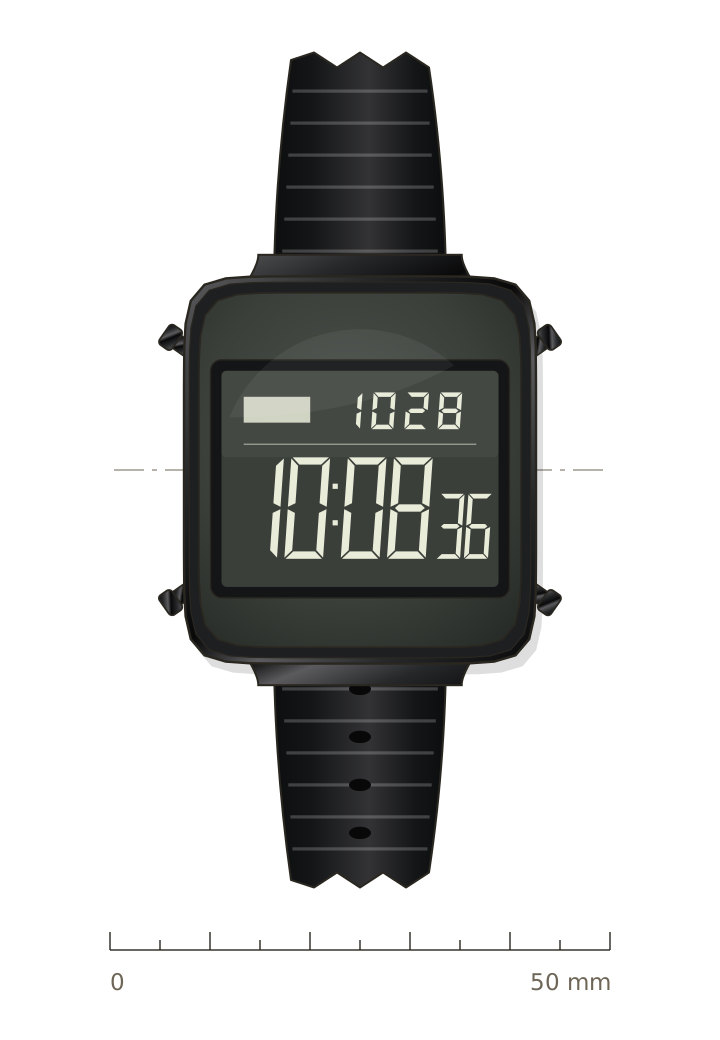 F-91WCasio
 ChandlerCitizen
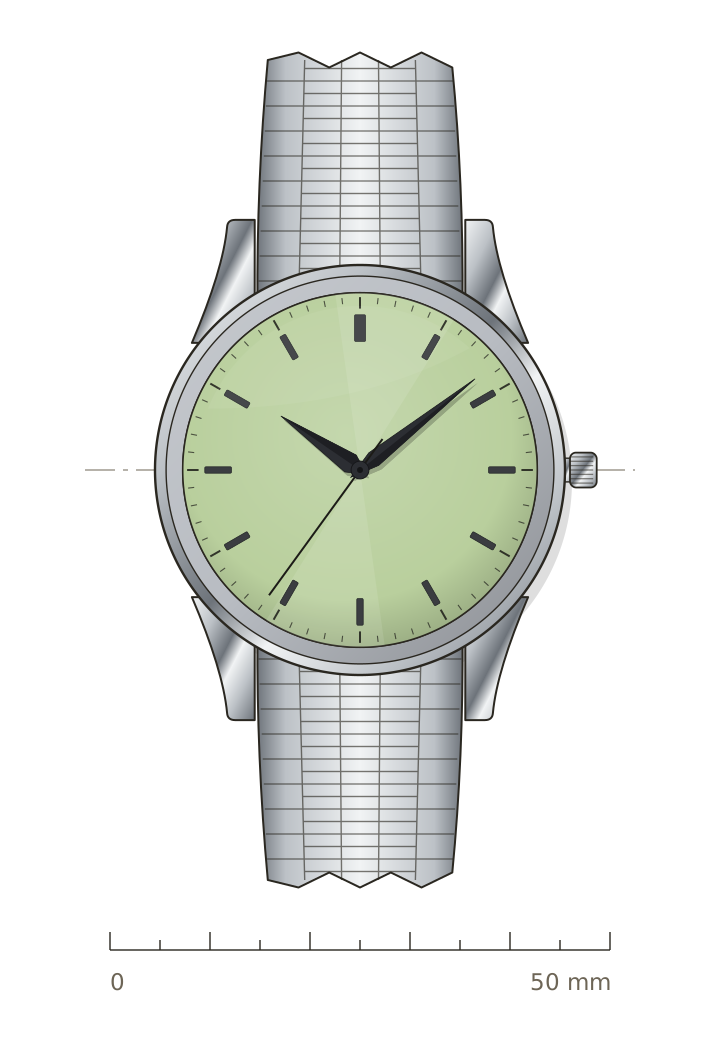 Oyster Perpetual 41Rolex
 Speedmaster Moonwatch Professional (zafiro)Omega
 5 Sports SKXSeiko
Sources
- 9S calibre manual (Grand Seiko) grand-seiko.com
- Spring Drive (Grand Seiko) grand-seiko.com
- Calibre 9R65 (Grand Seiko) grand-seiko.com
- Calibre 9F51 (Grand Seiko) grand-seiko.com
- Caliber 0100 (GPHG) gphg.org
- Master Chronometer Certification (Omega) omegawatches.com
- COSC Excellence Chronometer Certification (The Hour Markers) thehourmarkers.com
- The COSC Introduces the New Excellence Chronometer (Worn & Wound) wornandwound.com
- Casio F-91W (Wikipedia) en.wikipedia.org
- The Consumer Electronics Hall of Fame: Casio F-91W (IEEE Spectrum) spectrum.ieee.org
- Hands-on Oyster Perpetual 41 134303 (aBlogtoWatch) ablogtowatch.com